Common Flat Roof Problems We Fix
We handle both urgent leaks and recurring issues that keep coming back.
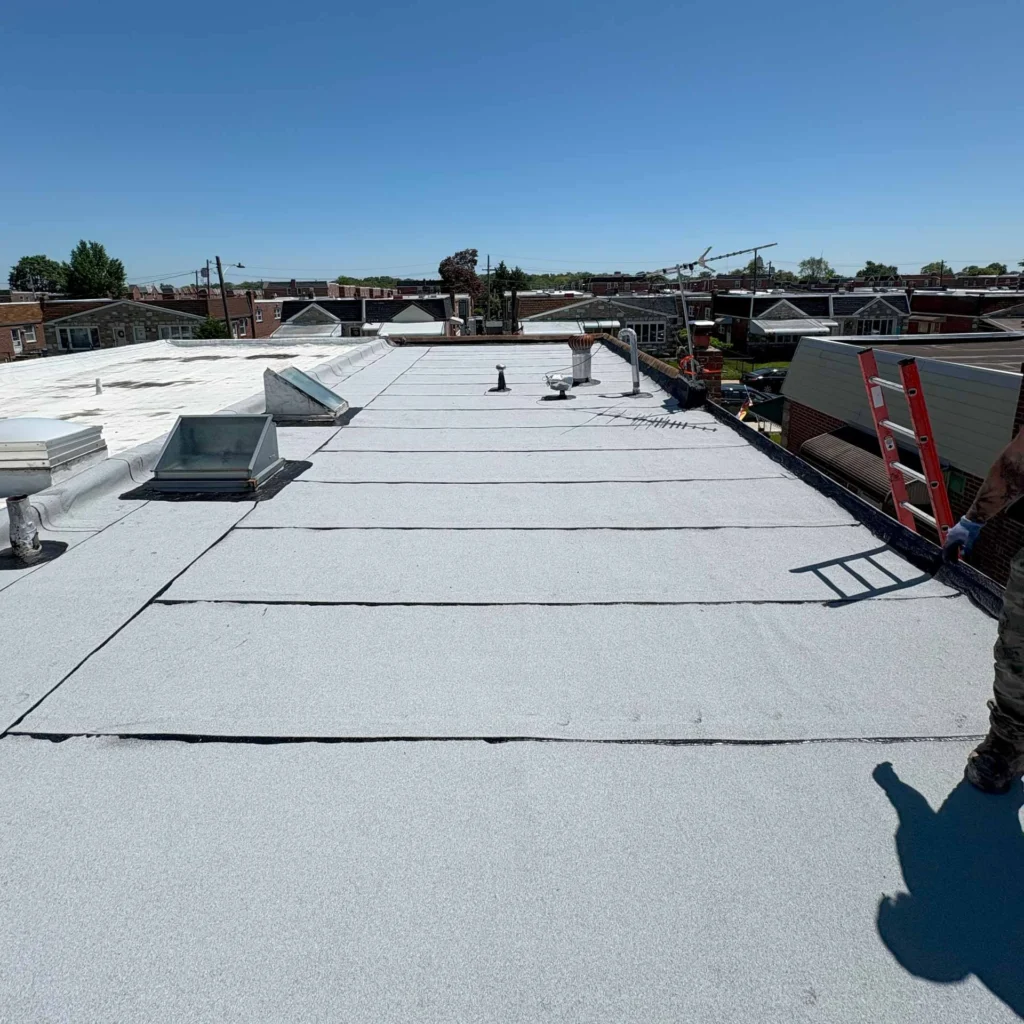
Common flat/low-slope issues:
- Ponding water that doesn’t drain properly
- Leaks at seams, laps, and membrane transitions
- Blistering, cracking, or surface wear from UV exposure
- Flashing failures at parapet walls and roof edges
- Leaks around HVAC curbs, vents, and skylights
- Saturated insulation or soft spots under the membrane
- Wind uplift causing membrane lifting or edge separation
- Drain/scupper clogs causing backup and interior damage
Signs You Need Flat Roof Repair or Replacement
Many low-slope roof issues start small and become bigger disruptions. If you notice these warning signs, it’s time to inspect.
Common warning signs:
- Water stains spreading on ceilings after rain
- Persistent ponding water 48+ hours after storms
- Visible cracks, splits, or open seams
- Soft or spongy areas underfoot (treat as urgent)
- Loose edges, lifted flashing, or peeling membrane
- Musty odors or damp insulation signs indoors
- Repeated repairs that don’t hold through storms
- Interior leaks near drains, edges, or rooftop units
Our Flat Roof System Process
Flat roof work must be efficient and methodical. We focus on watertight performance while minimizing disruption.
- Quick intake: Leak history, roof type, and where problems show up
- Inspection: Membrane condition, seams, edges, transitions, and drains
- Root-cause diagnosis: Identify why it’s happening—not just where it leaks
- Scope & options: Repair plan vs. replacement plan based on roof condition
- System installation: Correct materials, clean detailing, and secure transitions
- Verification: Confirm drainage performance and seal integrity
What We Inspect on Flat & Low-Slope Roofs
We evaluate the areas where low-slope failures typically originate.
Typical checks include:
- Membrane condition (wear, cracks, blistering)
- Seams, laps, and termination points
- Parapet walls, edge metal, and flashing transitions
- Drains, scuppers, and downspout flow
- HVAC curbs and rooftop penetrations
- Insulation saturation and soft spot indicators
- Signs of wind uplift at corners/edges
- Previous repair areas that may be failing again
Related Roofing Services
If a flat roof inspection reveals broader system issues, we can guide the next step.
- Storm damage inspection & stabilization
- Flashing and waterproofing upgrades
- Roof leak troubleshooting & repair
- Roof replacement planning and installation
- Ventilation and airflow upgrades (where applicable)
- Roof replacement cost and scope guidance
Flat Roof FAQs
Why do flat roofs leak more often?
Water drains more slowly on low-slope roofs, so seams, transitions, and drainage details become critical.
What causes ponding water?
Drainage design, clogged drains/scuppers, settled areas, or insulation/decking issues can all contribute.
Can a flat roof be repaired instead of replaced?
Sometimes—if damage is localized and the system is otherwise healthy. Widespread seam failure or saturated insulation often points to replacement.
Do you serve all of New Jersey?
Yes. We serve clients across New Jersey, with scheduling based on project scope and location.
Request Flat Roof Service in New Jersey
If you’re dealing with ponding water, recurring leaks, or seam issues, don’t wait. Roof Replacement Contractor provides flat roof system repair and replacement across New Jersey. Call +1 (551) 550-0912 to schedule an inspection.