Hackensack NJ Roof Replacement Considerations
Roof Replacement in Hackensack NJ requires a precise understanding of Bergen County’s distinct architectural landscape and environmental conditions. Serving homeowners across neighborhoods like Fairmount, Red Hill, Cherry Hill, and North Hackensack, we recognize that each property, from those lining Route 46 and Essex Street to homes situated along Passaic Street and Kinderkamack Road, presents unique roofing needs. Our approach to roof replacement is tailored to address the specific challenges and styles prevalent throughout this vibrant New Jersey community.
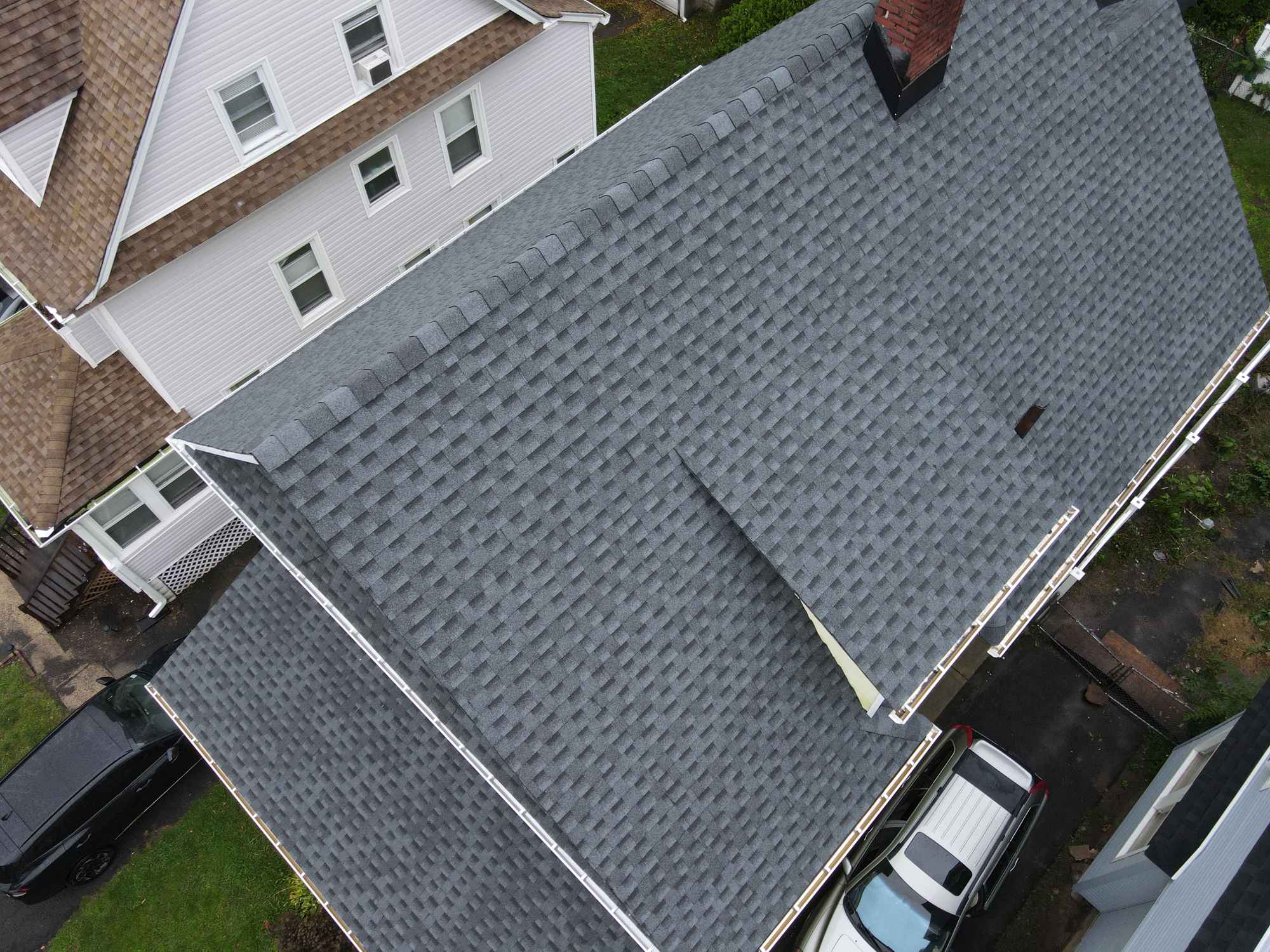
Hackensack’s housing stock is notably diverse, ranging from suburban single-family residential neighborhoods to stately older homes on acre-plus lots, and even encompassing two-family neighborhoods and large garden apartment complexes. This variety means that while many residential properties commonly feature durable asphalt shingle roof systems, commercial buildings and multi-unit complexes often utilize specialized flat roof systems. The temperate climate typical of Northern New Jersey, with its cold winters and hot, humid summers, introduces several roofing stressors. These include damaging freeze-thaw cycles that cause ice dams and shingle cracking, heavy snowfall that stresses roof structures, and high winds from nor’easters that frequently damage shingles and flashing, particularly for properties near the Hackensack River County Park. Summer humidity and heat also promote algae and moss growth, accelerating granule loss on roofs.
Considering the local climate, a successful roof replacement process in Hackensack integrates robust materials, proper roof replacement ventilation, and meticulous installation to withstand these elements. All roofing projects must also adhere strictly to local regulations. Property owners are required to secure Hackensack NJ permit requirements through the City of Hackensack Construction Code Official, and all work must comply with the New Jersey Uniform Construction Code (NJ UCC). Whether you’re near the Hackensack University Medical Center, the Bergen County Courthouse, or Borg’s Woods Nature Preserve, ensuring permit compliance is a critical step in any roofing endeavor. We aim to provide clear information on factors affecting roof replacement cost and ensure seamless project execution.
FAQs for Roof Replacement in Hackensack NJ
When should Hackensack homeowners consider a full roof replacement?
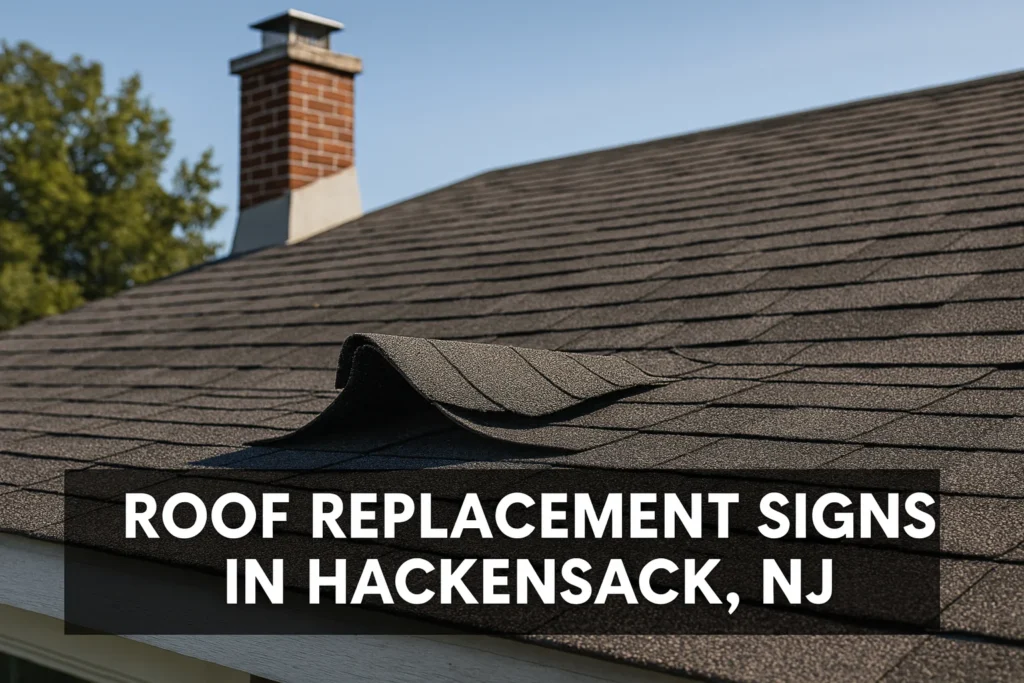
Hackensack homeowners should consider a full roof replacement when their existing roof shows significant signs of age or widespread damage beyond simple repairs. This often includes curling, buckling, or missing shingles, extensive granule loss, or multiple leaks within the home. Given Hackensack’s exposure to harsh winter conditions like freeze-thaw cycles and heavy snowfall, roofs typically aged 20+ years for asphalt shingles are particularly vulnerable. A professional roof inspection can accurately assess the current condition, detect underlying issues with the decking or structure, and help determine if a replacement is the most practical long-term solution.
What roofing materials are best suited for Hackensack’s climate?
For residential properties in Hackensack, durable asphalt shingles, especially architectural shingles, are a popular and effective choice. They offer robust resistance to high winds from nor’easters and can withstand significant temperature fluctuations. For commercial buildings or large garden apartment complexes that often feature flat roof systems, materials such as TPO or EPDM membranes provide excellent waterproofing and longevity against Hackensack’s summer humidity and winter precipitation. The optimal material selection should always factor in the specific roof type, local climate stressors, and your budget for a lasting investment.
What is the typical roof replacement process in Hackensack NJ?
The typical roof replacement process in Hackensack starts with a comprehensive inspection and detailed estimate. Following approval, all necessary Hackensack NJ permit requirements are obtained from the City of Hackensack Construction Code Official. The old roofing materials are then carefully removed, and the underlying roof decking is inspected for any damage that requires repair. New underlayment, ice water shield, and flashing are installed before the chosen roofing materials are applied. Finally, proper roof replacement ventilation is ensured, followed by a thorough site cleanup and a final inspection to confirm quality and compliance.
How do Hackensack’s permit requirements affect roof replacement projects?
Hackensack’s permit requirements are essential for ensuring the safety, structural integrity, and compliance of all roof replacement projects. Homeowners or their chosen roofing contractors must apply for permits through the City of Hackensack Construction Code Official, ensuring all work adheres to the New Jersey Uniform Construction Code (NJ UCC). This process involves submitting project details and often includes inspections at various stages. Obtaining permits before any work commences is crucial to avoid potential fines, project delays, or issues with future property sales, ensuring your new roof meets all local standards.
What are common signs of storm damage requiring roof replacement in Hackensack?
Common signs of storm damage in Hackensack, particularly after nor’easters or high winds, include missing, cracked, or bruised asphalt shingles. Granules found in gutters often indicate shingle erosion. For flat roofs, visible punctures, tears, or recurring standing water can point to damage. Inside your home, new water stains on ceilings or walls, or damaged flashing around chimneys and skylights are clear indicators. Properties near the Hackensack River County Park may experience more wind-related issues. A prompt professional inspection can determine the extent of damage and if a full roof replacement after storm damage is necessary.
What factors influence roof replacement cost in Hackensack NJ?
The roof replacement cost in Hackensack NJ is influenced by several key factors. These include the size and pitch of your roof, the specific type of roofing materials chosen (e.g., standard 3-tab shingles versus more durable architectural shingles or specialized flat roof systems), and the overall complexity of the installation. Additional costs may arise from the need for extensive decking repair, upgrades to roof replacement ventilation systems, and the disposal of old materials. Local permit fees and prevailing labor rates within Bergen County also play a significant role in determining the final project investment.