
Edgewater NJ Roof Replacement Considerations
Undertaking a Roof Replacement in Edgewater NJ requires a nuanced understanding of this Bergen County borough’s unique geographical features and diverse architectural styles. From the historic northern section of Undercliff, originally a fishing colony, to the bustling Town Centre, which acts as the main shopping artery, and the Southern area, a former industrial zone home to the significant Ford Motor Company Assembly Plant, each part of Edgewater presents distinct considerations. Key thoroughfares such as River Road, offering stunning views of the Hudson River and Manhattan, alongside County Route 505, Route 5, Gorge Road, and the colonial-era Edgewater Road (Oxen Hill Road), highlight the borough’s varied landscape. Property owners in Edgewater benefit from tailored roofing solutions that address both aesthetic preferences and the specific challenges posed by the local environment.
Addressing Edgewater’s Unique Housing Stock and Roof Types
Edgewater’s housing landscape is a compelling blend of old and new, transitioning from its industrial past to vibrant residential communities. The borough features numerous modern condo and townhouse developments along the waterfront, often incorporating multi-story residential buildings to maximize views and space. Historically, the area, including sites near landmarks like the Edgewater Free Library and Borough Hall, housed industrial facilities, many of which have been converted. This legacy means that while many contemporary residences utilize pitched/sloped residential roofs with asphalt shingles, older structures or converted industrial properties often require specialized flat roof systems. When considering an Edgewater NJ roof replacement, selecting appropriate roofing materials that complement the existing architecture while offering superior protection is paramount.
Navigating Edgewater’s Climate and Environmental Stressors for Roof Replacement
Edgewater, situated along the Hudson River, experiences a humid subtropical/temperate climate characterized by four distinct seasons, including winter temperatures averaging 25-35°F and summer temperatures between 75-85°F. This creates several specific roofing stressors. The proximity to the Hudson River and its 3.5 miles of shoreline exposes roofing materials to salt spray, which can accelerate the degradation and corrosion of metal components. The dramatic elevation changes and cliff formations, particularly near Palisades Interstate Park, create significant wind exposure, leading to increased wind loads on roofs. Furthermore, the age of Edgewater’s housing stock, especially industrial conversions, means many roofs are 30-50+ years old and susceptible to age-related wear. Heavy precipitation in Northern New Jersey (45-50 inches annually) coupled with dense development can lead to drainage challenges, particularly for flat-roof structures. Finally, the urban heat island effect from dense development contributes to temperature cycling, stressing roofing materials. A thorough assessment of these factors is crucial for any Edgewater NJ roof replacement project.
Permit Requirements for Your Edgewater NJ Roof Replacement
For any significant roofing work, including a new roof in Edgewater or extensive repairs, homeowners must comply with local regulations. All roof replacement projects in Edgewater, NJ, require permits from the Edgewater Borough Building Department / Edgewater Borough Code Enforcement. These permits ensure that all work adheres to the safety standards outlined in the New Jersey Uniform Construction Code (NJ UCC). It is advisable to consult the official Edgewater Borough website or the Bergen County Building Department resources to understand the specific requirements, including inspections and application processes, before planning your Edgewater roof replacement. This ensures that your project proceeds smoothly and in full compliance with municipal guidelines.
FAQs for Roof Replacement in Edgewater NJ
What specific materials are recommended for waterfront properties in Edgewater?
For waterfront properties in Edgewater, exposed to the Hudson River and salt spray, choosing resilient roofing materials is critical. While asphalt shingles are a common choice for pitched roofs, especially architectural shingles for their durability and aesthetic, specific attention should be given to corrosion-resistant flashing and fasteners. For flat roof replacement on condominium or townhouse developments, advanced membrane systems like TPO or EPDM are often recommended for their superior waterproofing and resistance to environmental elements. Proper installation, including robust edge detailing, helps mitigate salt air exposure and maintain the integrity of your new roof in Edgewater.
How does Edgewater’s steep topography impact roof replacement planning?
The dramatic elevation changes and proximity to the Palisades Cliffs, particularly along roads like Gorge Road, mean that steep topography is a significant factor in Edgewater NJ roof replacement. Properties on upper elevations experience increased wind loads, necessitating roofing systems designed for high-wind resistance. This may involve specific shingle fastening patterns or specialized roofing materials. Access for contractors can also be more complex, potentially influencing the cost of roof replacement. Experienced roofing professionals will consider these topographical challenges during the inspection and planning phases to ensure a safe and durable installation.
What should I know about replacing a flat roof on a converted industrial building in Edgewater?
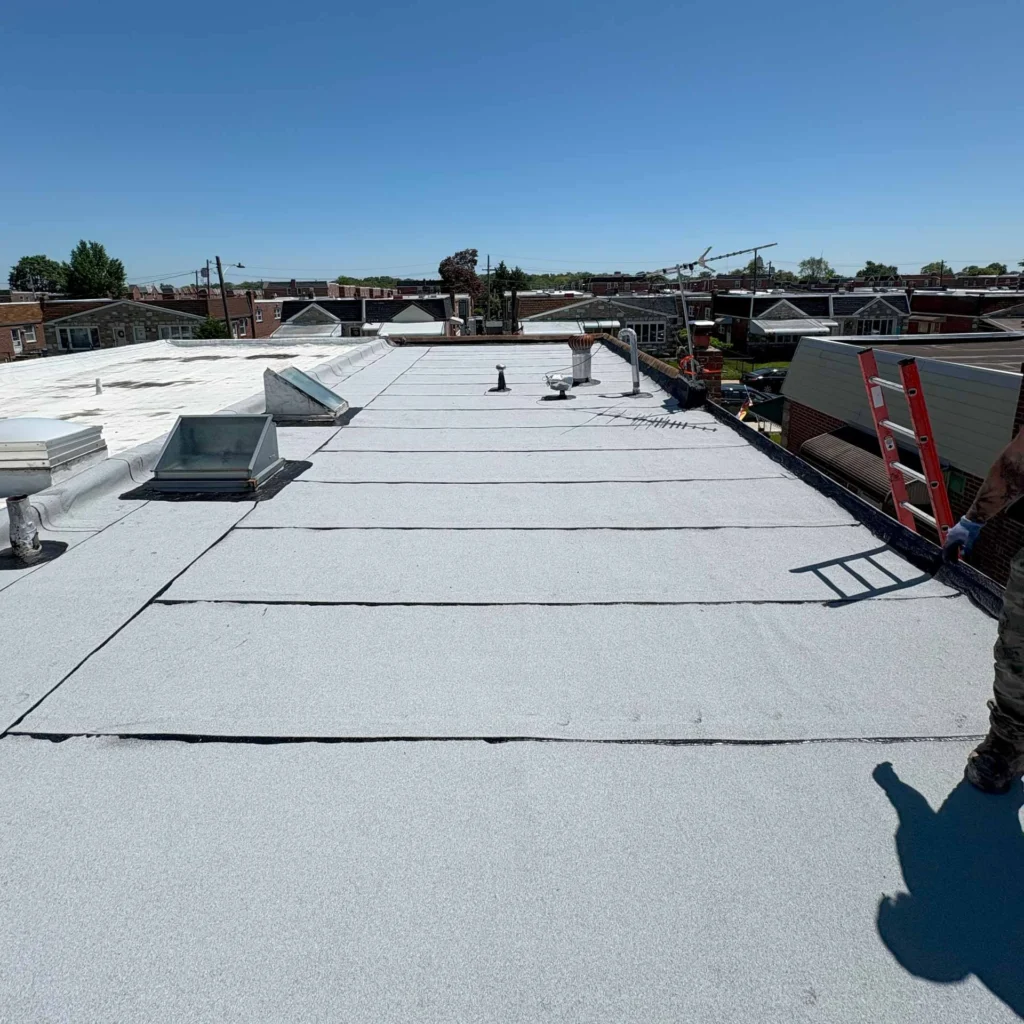
Replacing a flat roof on a converted industrial building in Edgewater, such as those in the Southern area near the former Ford Motor Company Assembly Plant, requires specialized expertise. These buildings often have unique structural considerations, existing drainage challenges, and may require upgrades to meet modern energy efficiency and building codes. Flat roof replacement typically involves specialized membrane systems designed for commercial and multi-story residential buildings. It’s crucial to assess the underlying deck, insulation, and ensure proper slope for drainage to prevent ponding water, which is a common issue for flat roofs in areas with heavy precipitation.
Are there any special considerations for older homes or historic buildings during roof replacement in Edgewater?
Older homes and historic buildings, like those near Borough Hall (constructed in 1904) or the Edgewater Free Library (dedicated 1916), often require careful consideration during an Edgewater NJ roof replacement. While direct historical preservation rules might not apply to all residential properties, maintaining architectural integrity is often a priority for homeowners. This might involve selecting roofing materials that match the original aesthetic, such as specific styles of asphalt shingles or even slate if applicable. The age of the housing stock also means assessing the underlying roof decking and structure for potential dry rot or damage before installing a new roof.
How does the urban heat island effect in Edgewater affect roofing materials?
Edgewater’s dense residential and commercial development, especially along River Road and in Town Centre, contributes to an urban heat island effect, where local temperatures are higher than surrounding rural areas. This increased heat causes accelerated thermal cycling (repeated expansion and contraction) of roofing materials. Over time, this stress can lead to premature cracking, warping, or fatigue of shingles and other components. When planning your Edgewater NJ roof replacement, considering lighter-colored roofing materials or those with reflective properties can help mitigate heat absorption, improving energy efficiency and extending the lifespan of the roof by reducing thermal stress.
What is the typical timeline for a roof replacement project in Edgewater, NJ?
The roof replacement process in Edgewater typically involves several stages, with the overall timeline depending on factors like roof size, complexity, material choice, and weather conditions. After initial consultation and inspection, obtaining necessary permits from the Edgewater Borough Building Department is a key step, which can take several weeks. Once permits are secured, the actual installation often takes 1-3 days for an average residential property, though larger or more complex projects, especially those involving flat roof systems or multi-story buildings, may take longer. Our team strives for efficient project management to minimize disruption.